Published Updated
Check whether this matches your current buying, selling, or location decision.
Scan the key points first, then decide whether to read the full analysis.
Is the California housing market cooling in 2026?
Headlines pick one number and build a mood around it. When a client sends me one, my first question is which number moved, because sales, median...
California sold more homes in June than a year earlier, and the Bay Area median price did not move at all. Both things are true, and neither one tells you what happened to a specific house.
Sales volume and median price answer different questions. California sold more homes in June while the Bay Area median stood still, and that combination usually reflects a change in which homes are selling rather than a broad decline in what homes are worth.
Headlines pick one number and build a mood around it. When a client sends me one, my first question is which number moved, because sales, median price, and competition on a specific street can all point different ways in the same month.
You might be wondering
If any of these sound like you, this guide was written for you.
- Is the California housing market cooling in 2026?
- Why are Bay Area home prices flat?
- Did California home sales go up or down in June 2026?
- What is the California median home price right now?
- Does a flat median price mean homes got cheaper?
Visual Context
Make the decision easier to see
Daily life fit
Commute, schools, city rhythm, and neighborhood feel shape long-term fit.

Space that works
Rooms, storage, and flow matter more in daily life than square-footage numbers.

The long hold
Think about who lives here in five years, and who buys it after you.
Read market news in layers
Market headlines only matter after they connect to your city, budget, and property type
-
Start here Headline
Check whether the news is statewide, Bay Area-wide, or specific to your city and price lane.
-
Supply
Low inventory does not mean every home is strong. Ask whether good homes are truly scarce.
-
Demand
Buyer speed depends on price, condition, location, and confidence.
-
Action
Bring the story back to whether you should wait, tour, offer, or sell.
-
By this point you are ahead of most
Did California home sales go up or down in June 2026?
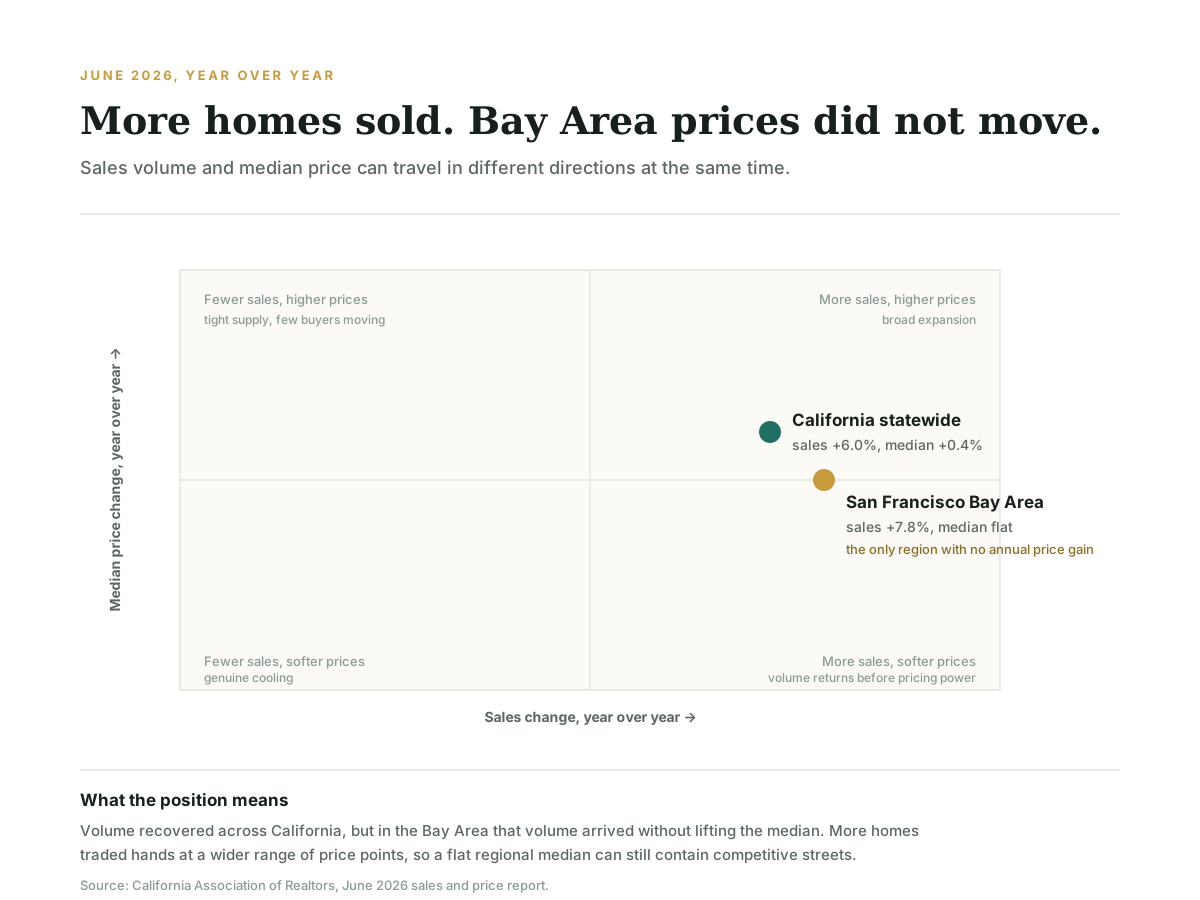
Up, and clearly. The California Association of Realtors reported existing single-family home sales at a 279,880 seasonally adjusted annualized rate in June 2026, a 6.0% increase over June 2025. After a stretch of thin transaction volume, more households actually moved.
That is the part of the report worth sitting with. Volume returning is a different signal from prices rising, and it usually comes first when buyers who had been waiting decide the terms are workable.
What is the California median home price right now?
The statewide median was $904,640 in June, down 2.8% from May's record $930,260 and 0.4% above June 2025. So the record set in spring did not hold, but the year-over-year figure is still slightly positive.
A month-to-month drop from a record is not the same as a decline. Spring usually produces the highest medians of the year because more expensive homes list then, and the number tends to ease afterward regardless of underlying demand.
Why were Bay Area prices flat while sales rose?
The Bay Area was the only California region that posted no annual increase in median price, while regional sales rose 7.8% year over year. More homes traded hands and the midpoint stayed where it was.
The most common explanation is mix. A median is simply the middle sale. If a larger share of June's closings came from entry and mid-tier homes, the midpoint can sit flat even in neighborhoods where well-prepared homes still drew competition. The number describes what sold, not what any particular home is worth.
That is why I am cautious with regional medians here. The Bay Area contains San Francisco, the Peninsula, the South Bay, and the East Bay, and those sub-markets have not been moving together.
Does a flat median mean Bay Area homes got cheaper?
No, and this is the most common misreading. A flat median is consistent with a well-located, well-prepared home receiving several offers in the same month that a dated or difficult property sits unsold.
San Francisco in particular has been running strong, with price gains among the steepest in years on the back of AI-driven demand. A buyer who reads 'Bay Area prices flat' and expects to negotiate hard on a competitive San Francisco listing is going to be surprised.
The honest read is that the region stopped adding price on average, not that it started subtracting.
How should a buyer or seller use this report?
If you are buying, treat the regional median as background and do your work at the property level. Recent comparable sales in that specific neighborhood, current competing listings, days on market, and price history will tell you more about your position than any statewide figure.
If you are selling, rising volume is genuinely good news because it means buyers are transacting. But flat regional pricing means you cannot assume last spring's peak comps will carry your list price. Price against what has actually closed nearby in the last several weeks.
What to watch over the next few months
Watch whether Bay Area sales volume holds while the median stays flat. If both persist, it suggests a market that is functioning at a wider range of prices rather than one that is weakening.
Also watch financing costs, because they move buying power before they move medians. A market can absorb more sales and still show no price growth when what buyers can borrow is under pressure.
Free segment read
Wondering what this market means for your specific move?
Tell me the city, home type, and whether you are buying or selling. I will reply with whether that exact segment is moving fast or sitting, and what that means for your timing. One email, no list to join.
Faster: text or call 510-813-3293, or WeChat Adam1Chen.
Related Local Guides
Sources and Credits
- C.A.R. June 2026 home sales and price report279,880 annualized sales, up 6.0%; median $904,640; Bay Area the only region without an annual price increase.
- Redfin San Francisco County market dataSan Francisco price and competition context used for the sub-market contrast.