Payment, down payment, reserves, and loan conditions.

Adam (Bailei) Chen | 北美亚当
Home Buying Guidance
Guidance for buyers comparing neighborhoods, prices, financing, disclosures, and offer strategy.
Start here as a first-time buyer
You do not need every answer first. You need the right order.
First-time buyers get overwhelmed because price, loan, city, schools, disclosures, and offers all arrive together. Separate the decision first and each step becomes calmer.
Loan documents, appraisal gaps, disclosure risk, and competition pressure.
City fit, property type tradeoffs, risk boundaries, and offer strategy.
Read the buying flow, then send me your budget, cities, and timeline.
Payment Calculator
Estimate the true monthly payment before touring
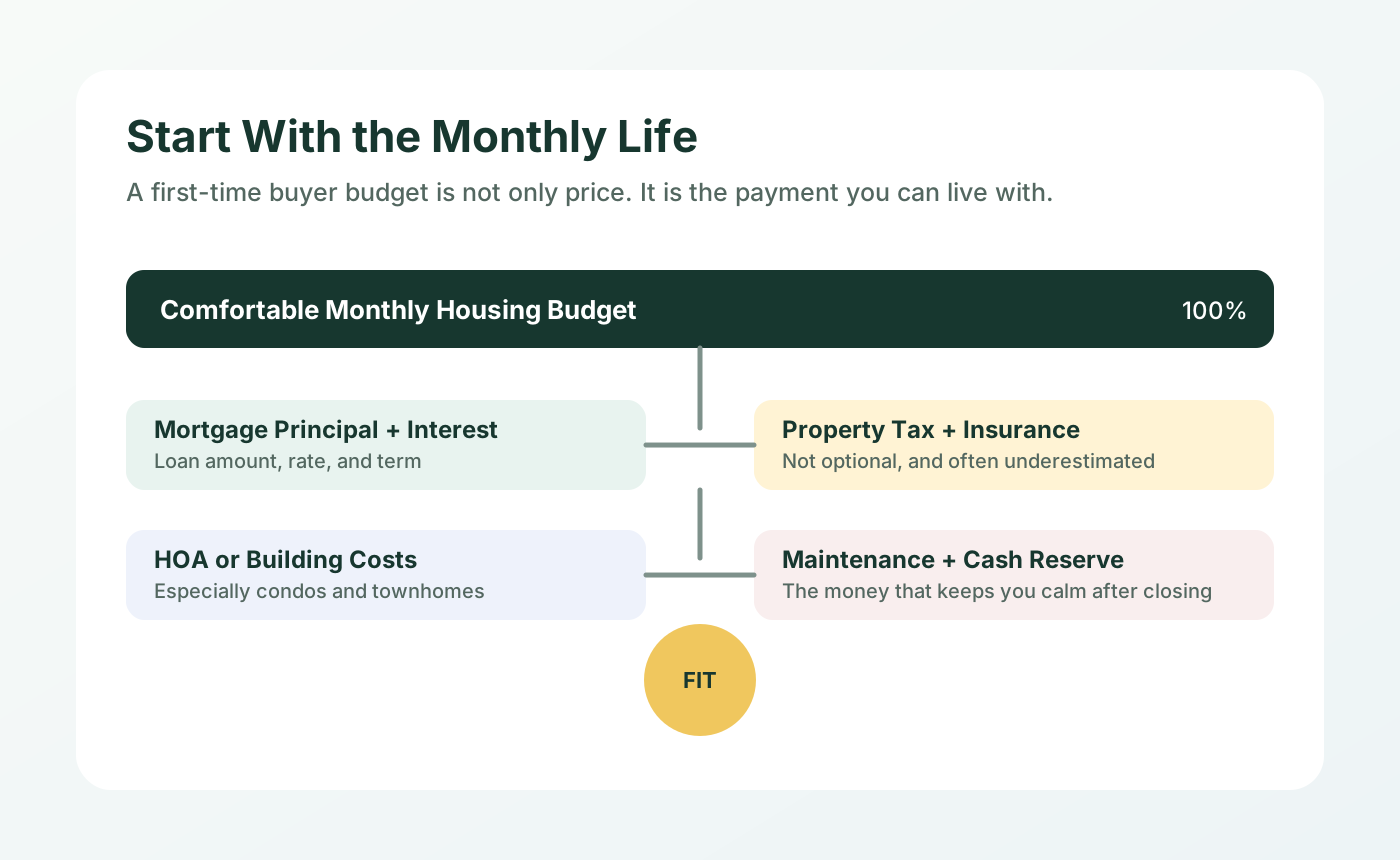
Combine price, down payment, rate, property tax, insurance, and HOA to see a realistic monthly budget. Planning estimate only, not a loan quote.
Down payment$0
Loan amount$0
Principal & interest$0
Property tax / mo$0
Insurance / mo$0
HOA / mo$0
Total monthly payment$0
Want your real financing picture? Talk it through with Adam
Page Guide
Jump to the part you need first
Use these links if you want the fast path first, then read the full page when you have time.
Buyer Decision Journey
From first-home anxiety to knowing why each step matters
You do not need to understand everything on day one. Separate the decision, the risk, and the evidence at each stage, and buying becomes much clearer.
01
This stage
Turn your numbers into a life decision
1-3 weeks
Clarify loan strength, down payment, reserves, and a monthly payment that still leaves room for real life. The goal is not the highest approval amount.
- Watch for
- A rate change, gift funds, income documentation, or reserve requirement can turn a favorite home into pressure if it is not surfaced early.
- How Adam helps
- Use your actual monthly life, cash position, and timeline to establish a range you can carry with confidence.
02
This stage
Place city and property type on one map
At your pace
Compare commute, school boundaries, lifestyle, home age, HOA, and future resale instead of chasing finishes and photos alone.
- Watch for
- At the same budget, a condo, townhome, and single-family home can have very different maintenance, insurance, rule, and resale tradeoffs.
- How Adam helps
- Connect city research, property-type tradeoffs, and your daily routine to identify what actually deserves priority.
03
This stage
Keep excitement and risk in the same room
1-3 days per home
At every showing, capture layout, light, maintenance feel, known issues, and how the next buyer might read the home.
- Watch for
- Roof, foundation, drainage, permits, insurance, or HOA information can affect value more than the first photos reveal.
- How Adam helps
- Separate issues into accepted risk, follow-up questions, and price-impact items so interest does not replace judgment.
04
This stage
Decide if the competition is worth chasing
Often 17-30 days
Read recent sales, active competition, seller priorities, appraisal support, and contract terms as one decision.
- Watch for
- In multiple offers, it is easy to focus only on price and miss contingencies, cash-gap ability, financing strength, and your walk-away line.
- How Adam helps
- Set the ceiling and walk-away point first, then use evidence to decide whether to compete and how to structure the offer.
05
This stage
Keep escrow steady and transparent
Final days before closing
Deposit, lender conditions, appraisal, document review, signing, and final walkthrough all have their own timing.
- Watch for
- Near closing, unclear documents, wire instructions, funds, or timing can create unnecessary pressure.
- How Adam helps
- Know what the transaction is waiting on, why each document matters, and when the right licensed professional should join the conversation.
Buyer Decision Map
Prepare first, tour second, offer with confidence
Bay Area buying can feel fast. This framework separates the decision into financing, location, risk, and offer strength.
Financing clarity
Loan, down payment, payment, reserves
Location fit
Commute, schools, lifestyle, resale
Risk review
Disclosures, inspections, HOA, insurance
Offer strategy
Price, terms, appraisal, timeline
Decision Sequence
1Needs2Loan3City4Disclosures5Offer6Escrow

The right home is the one whose tradeoffs you understood before you offered.
First-Time Buyer
A clearer framework for your first home
First-time buying in the Bay Area feels hard because the information is dense and the pace is fast. Break the decision into smaller parts first.
Monthly payment matters more than price
First-time buyers should ask whether the payment leaves room for real life, not only how high they can qualify.
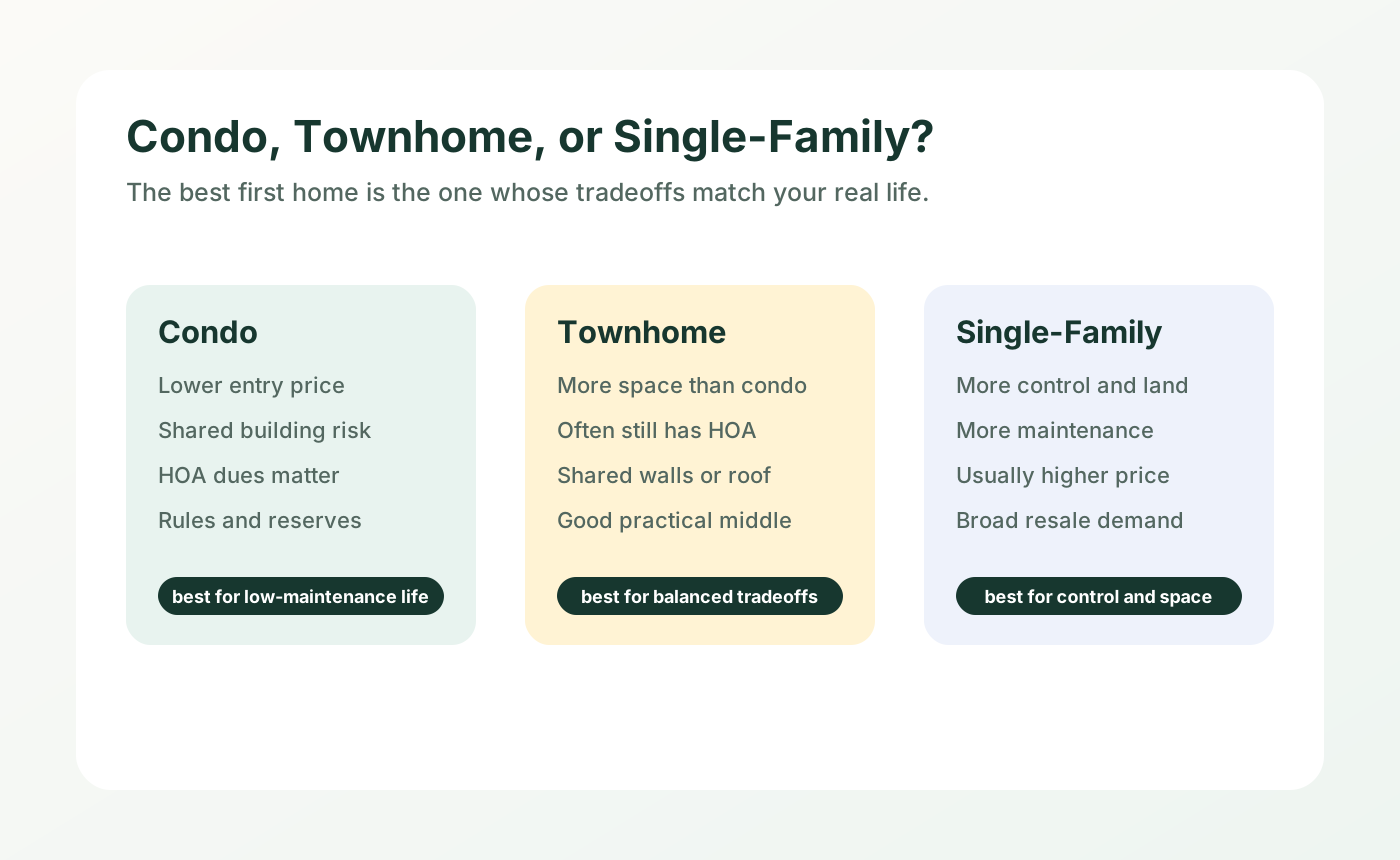
Property type is a lifestyle choice
Condo, townhome, and single-family are tradeoffs across budget, maintenance, control, and space.
Set filters before touring
City, commute, schools, age, HOA, insurance, repair risk, and resale should be clear before you fall for a home.
Read risk before writing
Speed matters, but disclosures, inspections, appraisal, and lender conditions should be understood before emotion takes over.
Bay Area Buyer Roadmap
First-time buyers do not need every answer at once. They need the right sequence.
This roadmap breaks buying into five stages: what to decide, where people get stuck, and how I help you think through it.
1. Confirm buying power first
- Decision
- Monthly comfort, down payment, closing costs, reserves, and loan type.
- Common friction
- A shallow pre-approval, rate change, gift funds, DTI, or reserves can weaken offer confidence.
- How Adam helps
- Translate budget into real-life pressure before choosing price range and cities.
2. Filter city and lifestyle fit
- Decision
- Commute, school boundaries, property type, neighborhood rhythm, and future buyer pool.
- Common friction
- Reacting only to photos and list price can hide commute, maintenance, insurance, HOA, and lifestyle cost.
- How Adam helps
- Connect city pages, property-type articles, and your daily life into one comparison.
3. Read risk while touring
- Decision
- Age, condition, disclosures, inspections, permits, HOA, NHD, and insurance questions.
- Common friction
- Bay Area pace is fast, but writing before understanding documents can create surprise costs.
- How Adam helps
- Separate disclosure issues into accepted risk, follow-up questions, and price-impact items.
4. Judge competition before offering
- Decision
- Price, contingencies, deposit, closing timeline, appraisal gap, and seller priorities.
- Common friction
- In multiple offers, buyers can over-focus on price and miss terms, financing strength, and risk tolerance.
- How Adam helps
- Compare comps, active competition, and buyer demand before deciding whether to chase the home.
5. Keep escrow organized
- Decision
- Deposit, lender conditions, appraisal, final walkthrough, signing, funding, and recording.
- Common friction
- Documents, timing, and funds can feel stressful near closing if no one explains the sequence.
- How Adam helps
- Know what each step is waiting on, what you are signing, and when another professional should be involved.
Buyer Glossary
First-time buyer terms, explained simply
You do not need to memorize every term, but you will see these words while touring, reading disclosures, writing offers, and entering escrow. Knowing the plain meaning makes the process calmer.
Pre-approval
A lender's review of income, credit, assets, and debts to estimate buying power. In the Bay Area, buyers usually need stronger documentation before writing offers.
Disclosure
Seller documents and reports describing known property conditions, risks, and history. Buyers should review condition, repairs, HOA, insurance, and natural hazard context before offering.
Contingency
A contract protection such as loan, appraisal, inspection, or document review. Keeping, shortening, or removing contingencies should match risk tolerance and competition.
Appraisal
A lender-ordered value opinion to support the loan. Competitive offers can create an appraisal gap, so buyers should know their gap plan before writing.
Escrow
A neutral third party that helps coordinate deposit, documents, signing, funds, and recording. Buyers should know what each timeline step is waiting on.
HOA
A homeowners association common in condos and townhomes. It can affect monthly dues, rules, repair responsibility, insurance, and loan review.
NHD
Natural Hazard Disclosure report. It helps buyers understand fire, earthquake, flood, and other area risks. It is not the same as a property inspection.
Final walkthrough
A final check before closing to confirm the home's general condition and agreed items. It is usually not a full new inspection or renegotiation moment.

You are choosing a street and a weekday routine, not only a floor plan.
Process
Bay Area buyer flow: what to expect
A normal Bay Area purchase can move fast once a good home appears. The goal is to prepare before emotion and competition enter the room.
Typical timeline: 1-3 weeks to prepare financing and criteria, then search as long as needed, then roughly 17-30 days from accepted offer to close depending on financing, contingencies, lender speed, and escrow.
1. Strategy call
Clarify budget, lifestyle, city targets, commute, schools, property type, and what would make you walk away.
2. Financing first
Pre-approval, proof of funds, down payment source, gift funds if any, debt-to-income, reserve requirements, and rate comfort should be checked before serious touring.
3. Search and compare
Tour homes, compare micro-neighborhoods, property age, HOA, insurance questions, commute pattern, and resale logic.
4. Disclosure review
Before writing, review seller disclosures, inspections, natural hazard information, HOA documents if applicable, title/escrow information, and known property issues.
5. Offer strategy
Price, contingencies, deposit, closing timeline, lender strength, rent-back, appraisal risk, and seller priorities are discussed before signing.
6. Escrow and contingencies
After acceptance, deposit is wired, inspections or reviews happen if included, lender conditions are cleared, appraisal may occur, and documents move through escrow.
7. Signing and closing
Loan documents, closing disclosures, escrow instructions, final walkthrough, funding, recording, and key transfer complete the purchase.
Where buyers often run into trouble
- Financing changes: rate movement, lender conditions, income documentation, gift funds, or reserve requirements can slow down approval.
- Appraisal risk: if value comes in below price, the buyer and agent need a plan before writing the offer.
- Disclosures: older homes, permits, roof, foundation, sewer lateral, drainage, termites, HOA rules, or insurance concerns can change the decision.
- Competition pressure: multiple offers can push buyers to remove protections too quickly. Speed should not replace understanding.
- Cash to close: buyers need to understand down payment, closing costs, deposit timing, and wire safety.
Common documents buyers may see
- Buyer representation or broker disclosure documents
- Agency disclosure and relationship acknowledgments
- Purchase agreement and addenda
- Seller disclosures such as TDS/SPQ when applicable
- Natural Hazard Disclosure report
- Inspection reports and repair information
- HOA documents for condos/townhomes
- Loan estimate, closing disclosure, escrow instructions, and final loan documents
This is general education, not legal, tax, insurance, or lending advice. Buyers should consult the proper licensed professionals when needed.
Frequently Asked Questions
What is the first step before buying in the Bay Area?
Start with financing, cash-to-close, monthly payment comfort, and city logic before heavy touring. That keeps offer strategy grounded when the right home appears.
What should a buyer's Realtor help me review?
A buyer's Realtor should help with neighborhood comparison, disclosures, pricing, inspection risk, HOA documents, insurance, appraisal risk, and offer terms.
Why compare cities and commute before writing offers?
Bay Area value often comes from commute, school perception, housing type, inventory, and future buyer demand. City comparison keeps a beautiful home from hiding long-term lifestyle cost.
When should I contact Adam?
Before serious touring is best. We can clarify budget, financing, target cities, commute, and risk tolerance before the market starts applying pressure.
A calmer buying process with better local context
Buying a home should not feel like guessing. I help buyers compare neighborhoods, understand financing pressure, read disclosures carefully, and build an offer strategy with patience instead of panic.
Ask Adam About BuyingContact Adam
You can always contact me through the information below.