
Published Updated
Check whether this matches your current buying, selling, or location decision.
Scan the key points first, then decide whether to read the full analysis.
Does Prop 19 let parents transfer a California home to children without reassessment?
When families ask whether to transfer, inherit, keep, or sell a long-held Bay Area home, I separate the emotional question from the operating math....
For Bay Area families, Prop 19 changed one of the most common assumptions about passing a home to children: a low property tax basis does not automatically survive every transfer. Before a deed is signed or an inherited home is kept, the family needs to verify eligibility, occupancy, filing deadlines, and the real cost of holding the property.
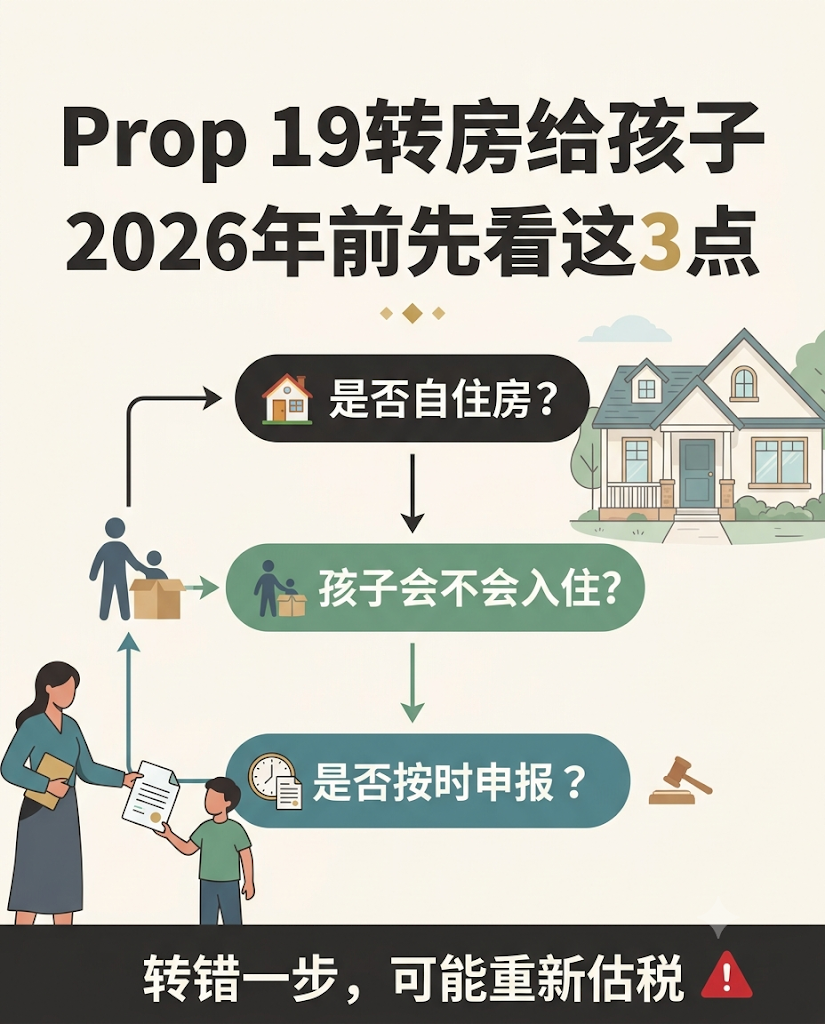
Prop 19 did not make parent-child transfers impossible, but it made them more conditional. For many Bay Area families, the key questions are whether the property was the parent's principal residence, whether the child will use it as a principal residence, whether exemption paperwork is filed on time, and whether keeping the home still makes sense after taxes, insurance, maintenance, and sibling buyout issues.
When families ask whether to transfer, inherit, keep, or sell a long-held Bay Area home, I separate the emotional question from the operating math. Before anyone assumes the old property tax basis survives, the family should verify the assessor rules and then compare the realistic cost of keeping the home against selling or restructuring ownership.
You might be wondering
If any of these sound like you, this guide was written for you.
- Does Prop 19 let parents transfer a California home to children without reassessment?
- What happens if a child inherits a Bay Area rental or second home?
- Does the child need to live in the inherited home for the Prop 19 exclusion?
- What should siblings decide before keeping or selling an inherited house?
Visual Context
Make the decision easier to see
Family carrying cost
Before transfer or inheritance, review taxes, insurance, repairs, and rental cost.

Document check
County assessor, tax, and legal documents should be reviewed by situation.

Keep or sell
The family decision is emotional, but it is also a real cash-flow question.
Ranked by importance. Settle the top items before the ones below.
- 1 Was it the parent's main home? Start here
- 2 Will the child live there? Key rule
- 3 Are exemption forms on time? Deadline risk
- 4 Do siblings agree on the plan? Avoid conflict
- 5 Have tax and carrying costs been modeled? Run the numbers
Informed by: California BOE Prop 19, BOE Publication 801
Use this guide through four seller questions
Seller prep should make buyers trust the home faster
-
Start here Condition
Which details may create concern about maintenance, insurance, financing, or future repairs.
-
Presentation
Whether photos, staging, and flow help buyers understand the space quickly.
-
Price
Whether the asking strategy is supported by sales, competition, and demand evidence.
-
Negotiation
After offers arrive, compare price, terms, risk, and timing together.
-
By this point you are ahead of most
How does Prop 19 affect inheriting a parent's home?
The first question is whether the home was the parent's principal residence. Prop 19 treats family homes differently from investment property, rental property, and second homes. That distinction matters because many Bay Area parents bought decades ago with a very low assessed value, while the current market value may be dramatically higher.
If the property is not a qualifying principal residence, families should not assume the old parent-child exclusion applies the way it did before Prop 19. A reassessment can change the annual property tax picture enough to affect whether keeping the home is practical.
Do I have to live in an inherited home to keep the low tax base?
For a qualifying family home, the next practical question is whether the child will actually use it as a principal residence. It is not enough for the family to say, in theory, that someone may keep it. The family should confirm what the county assessor requires, including homeowner exemption timing and the exclusion claim.
This is where real family logistics become just as important as the tax rule. If one child lives locally and another lives out of state, the family needs to decide who occupies the property, who pays the carrying costs, and whether a buyout or sale is more realistic.
How should siblings decide whether to keep or sell?
A common Bay Area scenario is an older San Francisco, San Jose, or East Bay home left to multiple siblings. Everyone wants to keep options open, but the cost of waiting can be real: property taxes, insurance, repairs, mortgage payments, utilities, vacancy risk, and eventually selling costs.
Before listing, transferring, or renting the home, families should compare after-tax outcomes with professional guidance. A real estate agent can help estimate market value and likely resale demand, but an estate attorney, CPA, and county assessor should address the legal and tax questions.
Practical Next Step
Before making a decision, write down three facts: the current use of the property, the child's realistic occupancy plan, and the expected carrying costs under both reassessed and non-reassessed scenarios. Then take those facts to the right professionals before changing title.
This article is for general real estate education only. It is not legal, tax, lending, or estate planning advice, and it should not be used as a substitute for advice from qualified professionals who can review the exact property and family facts.
Free parcel check
Want to know what these rules mean for your exact property?
Send me your address. I will reply with which water and sewer district actually bills you, whether your city's rules are current or overridden by state law, and the fees that would realistically apply. No obligation, and you will know more than most counters will tell you.
Faster: text or call 510-813-3293, or WeChat Adam1Chen.
Related Local Guides
Helpful External Resources
Sources and Credits
- California State Board of Equalization: Proposition 19Used for the statewide parent-child and grandparent-grandchild transfer framework.
- BOE Publication 801Used for detailed Prop 19 exemption timing and qualifying-property context.
- San Francisco Assessor-Recorder Prop 19 GuidanceUsed for local assessor guidance relevant to San Francisco property owners.
- California BOE County Assessors DirectoryHelpful for finding the right county assessor before filing or transferring.
Image: Adam Chen original XHS cover image