Published Updated
Check whether this matches your current buying, selling, or location decision.
Scan the key points first, then decide whether to read the full analysis.
Why are California homeowners staying in their homes longer?
The practical question is no longer “will the market go up?” It is “if good homes do not come up often, which property gives me a way to create value...
California homeowners are not moving the way they used to. That one fact explains a lot about why Bay Area buyers can feel stuck: not enough good homes, not enough turnover, and too many buyers chasing the same clean listings when they finally appear.
The Bay Area appreciation story is not only about prices going up. It is about turnover going down. When owners hold homes for 16 to 19 years, the best listings become harder to replace, so buyers need to identify where value can still be created: ADUs, fixer improvements, replacement-cost support, and neighborhood change.
The practical question is no longer “will the market go up?” It is “if good homes do not come up often, which property gives me a way to create value instead of only waiting for appreciation?”
You might be wondering
If any of these sound like you, this guide was written for you.
- Why are California homeowners staying in their homes longer?
- How does low housing turnover affect Bay Area buyers?
- What creates appreciation when inventory is tight?
- Are ADUs and fixer homes still good Bay Area upside strategies?
Visual Context
Make the decision easier to see
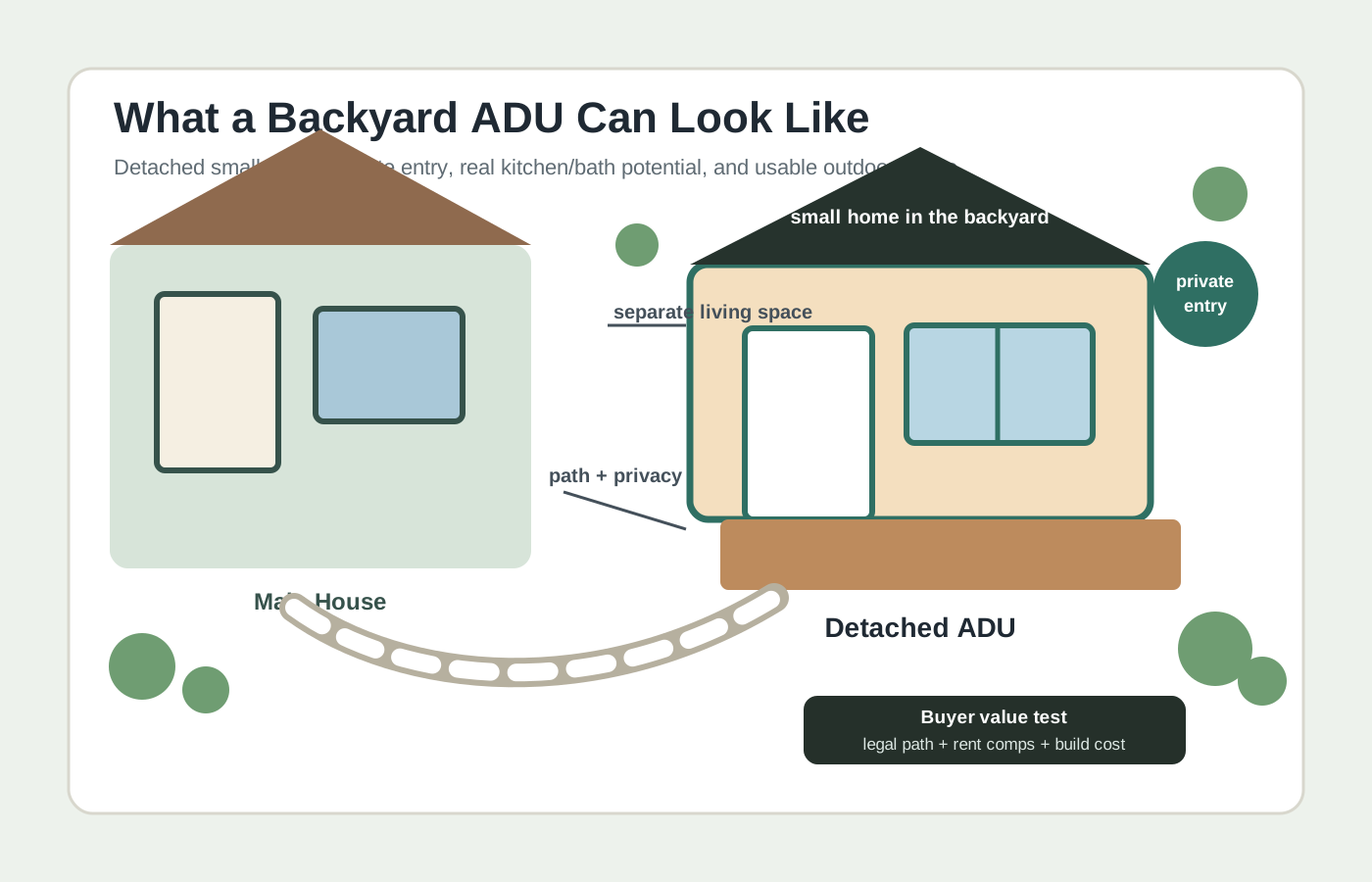
What an ADU looks like
Show the reader a real use case: a small backyard home with its own entry, patio, and income or family flexibility.

Fixer layout upside
Forced appreciation is easier to understand when wasted space becomes usable living area.

The home itself
Look at space, condition, maintenance, and resale before only reacting to photos.
Data source: Redfin homeowner tenure report, SFGATE California coverage
Ranked by importance. Settle the top items before the ones below.
- 1 ADU or added living space Most controllable
- 2 Fixer layout or condition improvement Works if bought right
- 3 High replacement cost Supports existing homes
- 4 Transit, retail, or planning change Verify the project
- 5 Rumor-only upside Do not overpay
Informed by: California HCD ADU resources, VTA BART Phase II, C.A.R. May 2026 sales report
For first-time buyers, read in this order
Build the decision order before focusing on one listing
-
Start here Payment
Confirm loan, tax, insurance, HOA, and cash reserves feel sustainable.
-
Location
Compare city, commute, schools, lifestyle, and future resale together.
-
Documents
Disclosures, inspections, HOA, and appraisal risk can change the real decision.
-
Offer
Before bidding, know why to go higher, why to stop, and what the downside is.
-
By this point you are ahead of most
How long do California homeowners hold their homes?
Redfin’s homeowner tenure analysis, highlighted by SFGATE, found that California metros sit near the top of the country for how long owners keep their homes. Los Angeles was around 20 years, San Jose about 18.7 years, and San Francisco about 16.5 years. The national median was about 12 years.
That matters because housing supply is not only new construction. It is also turnover. If fewer existing owners sell, buyers do not get many chances at the homes they actually want.
Why do owners stay put instead of moving?
Part of it is tax. Proposition 13 can make long-held California homes much cheaper to keep than to replace. Part of it is rates. Many owners have older loans that are hard to give up. Part of it is lifestyle: older owners may not see enough attractive downsizing options nearby.
For buyers, the result is simple. The home you want may not come up often. When it does, the decision has to be clearer and faster.
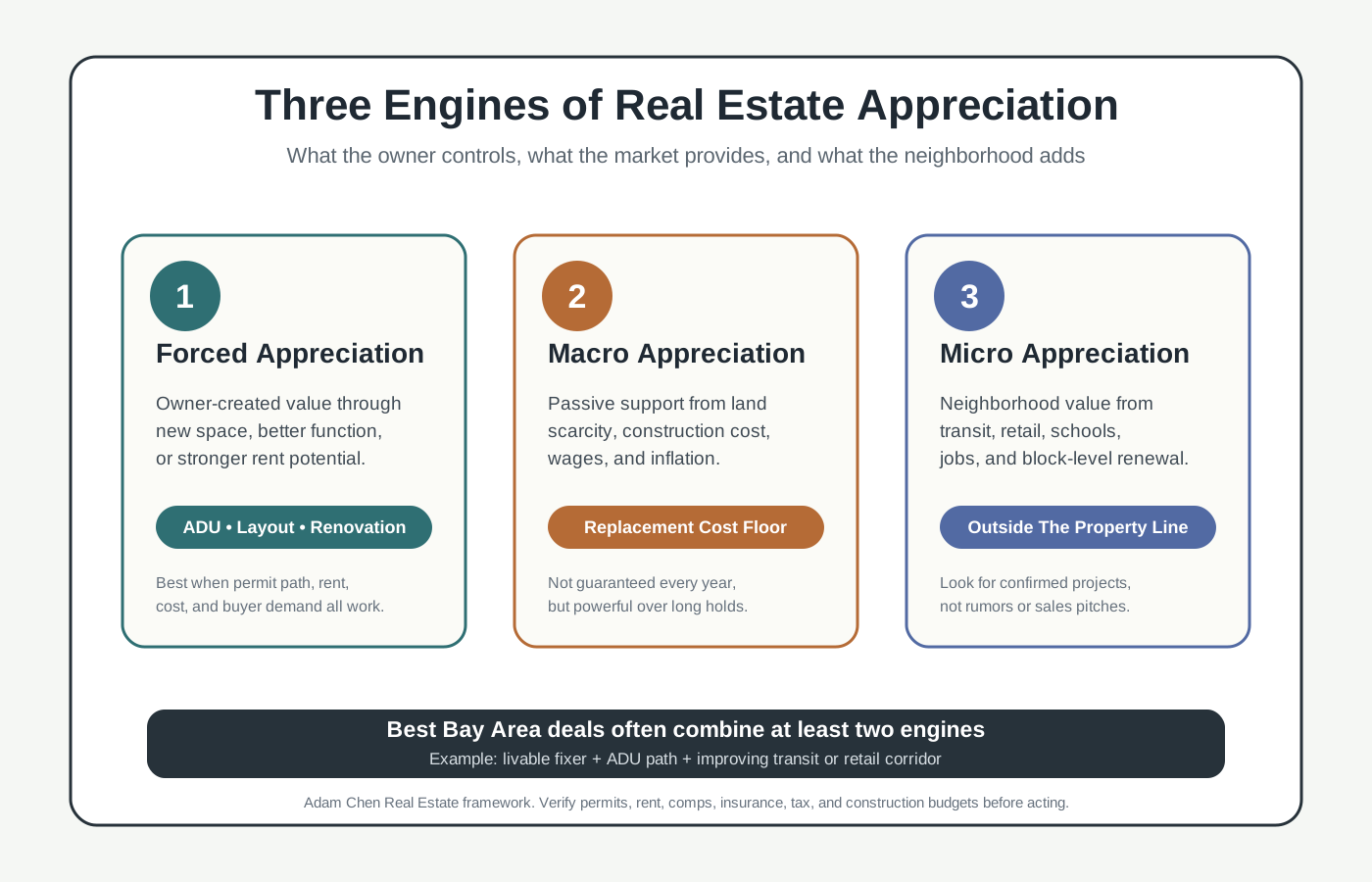
What upside can a buyer still control?
This is where forced appreciation matters. A buyer cannot force a locked-in owner to sell, but a buyer can choose a property with a legal path to more utility. In the Bay Area, that often means an ADU, a better floor plan, a cleaner renovation, or a flexible rental setup.
The keyword is legal. ADU potential should be checked against city rules, lot shape, setbacks, utilities, privacy, construction cost, and rent comps. A backyard that looks large online is not automatically a profitable ADU site.
The Outside-The-Property-Line Upside
Some appreciation comes from the neighborhood changing around the home. Transit, retail, safer corridors, cleaner streets, school demand, and job centers can all change how buyers value a location.
In the South Bay, VTA’s BART Silicon Valley Phase II and San Jose’s Urban Village planning are examples of changes buyers should track. The point is not to buy every property near a plan. The point is to separate confirmed projects from rumors.
- Better signal: funded transit, approved plans, signed retail, improving comps.
- Weak signal: “up and coming” with no dates, documents, or buyer demand.
- Best case: a livable home with ADU/fixer upside in a corridor that is already improving.
Adam’s Takeaway
Low turnover makes Bay Area real estate feel frustrating, but it also clarifies the strategy. Do not only ask whether the market will appreciate. Ask what makes this specific home more valuable over time.
If the answer is only “prices always go up,” that is too weak. If the answer is “scarce location, realistic ADU path, fixable layout, strong rent comps, and improving surroundings,” then the appreciation story is much stronger.
Free payment reality check
Want these numbers run for your actual budget?
Send me your target cities and rough budget. I will reply with what the true monthly payment looks like at today's rates, the cash you need beyond the down payment, and the one or two things to verify before you tour. No sign-up, no pressure.
Faster: text or call 510-813-3293, or WeChat Adam1Chen.
Related Local Guides
Helpful External Resources
Sources and Credits
- SFGATE: California home turnover crisisUsed as a style and data reference for California homeowner tenure and turnover pressure.
- Redfin: U.S. homeowner tenure reportPrimary source for homeowner tenure data across Los Angeles, San Jose, San Francisco, and the U.S.
- California HCD Accessory Dwelling UnitsUsed for ADU policy context and owner-created value examples.
- C.A.R. May 2026 Home Sales and Price ReportUsed for California market and replacement-cost context, including price-per-square-foot data.
- VTA BART Silicon Valley Phase IIUsed for the South Bay transit and neighborhood-change example.
- City of San Jose Urban VillagesUsed for local planning and micro-environmental appreciation examples.
- FHFA Working Paper on Mortgage Rate Lock-InUsed for the broader lock-in effect that discourages owners from selling.
Image: Adam Chen original framework graphic